Bluetooth technology, first developed in 1994 by Ericsson as a wireless alternative to RS-232 data cables, takes its name from the 10th-century Danish King Harald “Bluetooth” Gormsson, known for uniting Denmark and Norway—symbolizing the goal of unifying communication standards. Over the years, Bluetooth has evolved from a short-range data transfer solution into a global wireless standard widely used for audio, data, and device connectivity.
Today, Bluetooth allows audio streaming from smartphones, tablets, and computers to compatible devices, offering a convenient cable-free way to play music, podcasts, and other content. Modern Bluetooth standards support high-quality audio, low latency, broad device compatibility, and easy pairing, making it an essential technology for wireless audio applications.
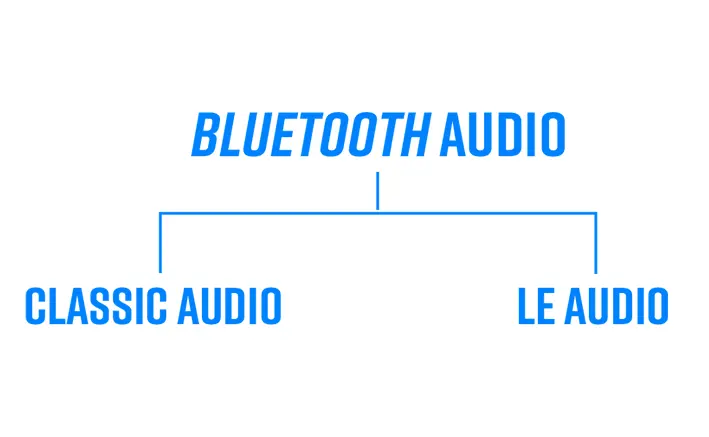
Bluetooth Classic Audio: Overview and Evolution
Bluetooth Classic Audio is the original standard for wireless audio streaming over Bluetooth, introduced in the early 2000s. Its development was driven by the need to replace wired connections for mobile phones, headsets, and portable speakers, enabling convenient, short-range wireless audio transmission.
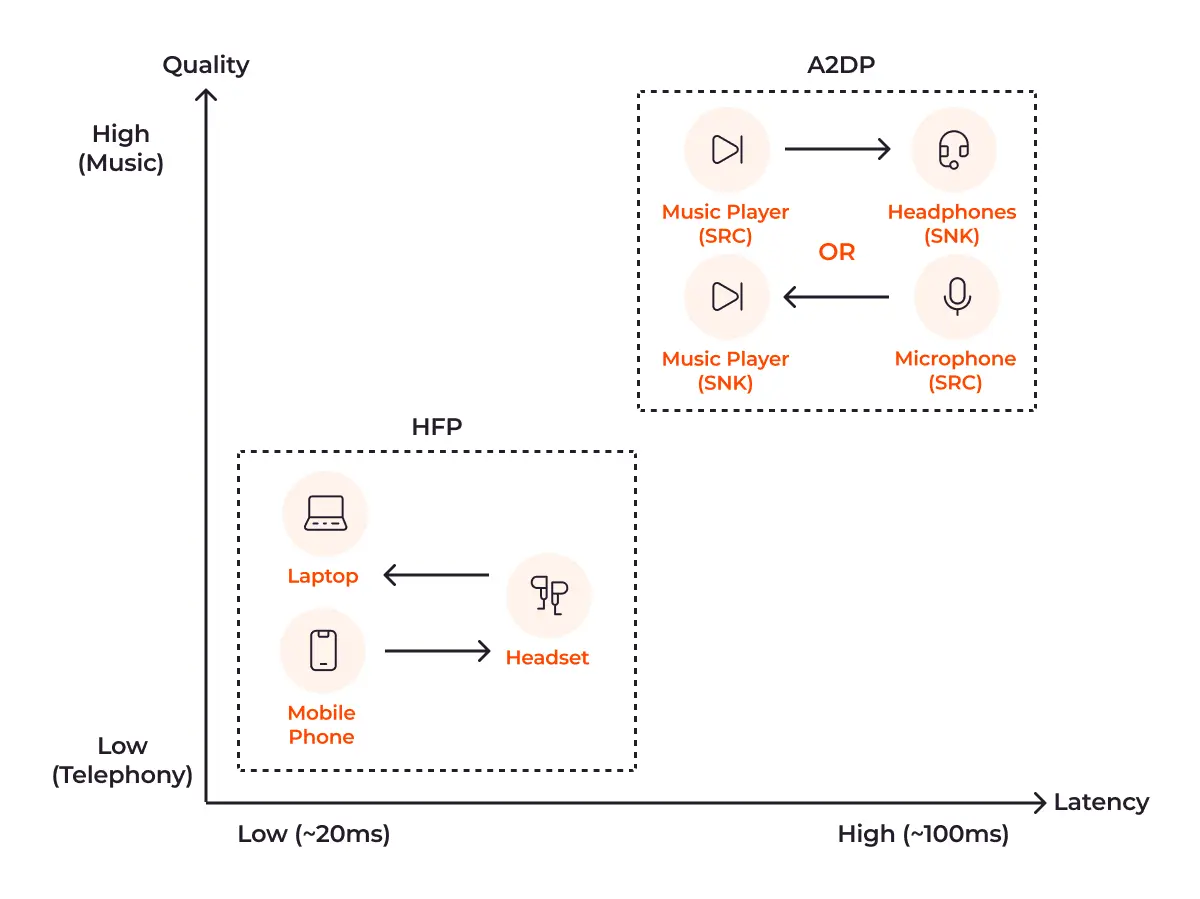
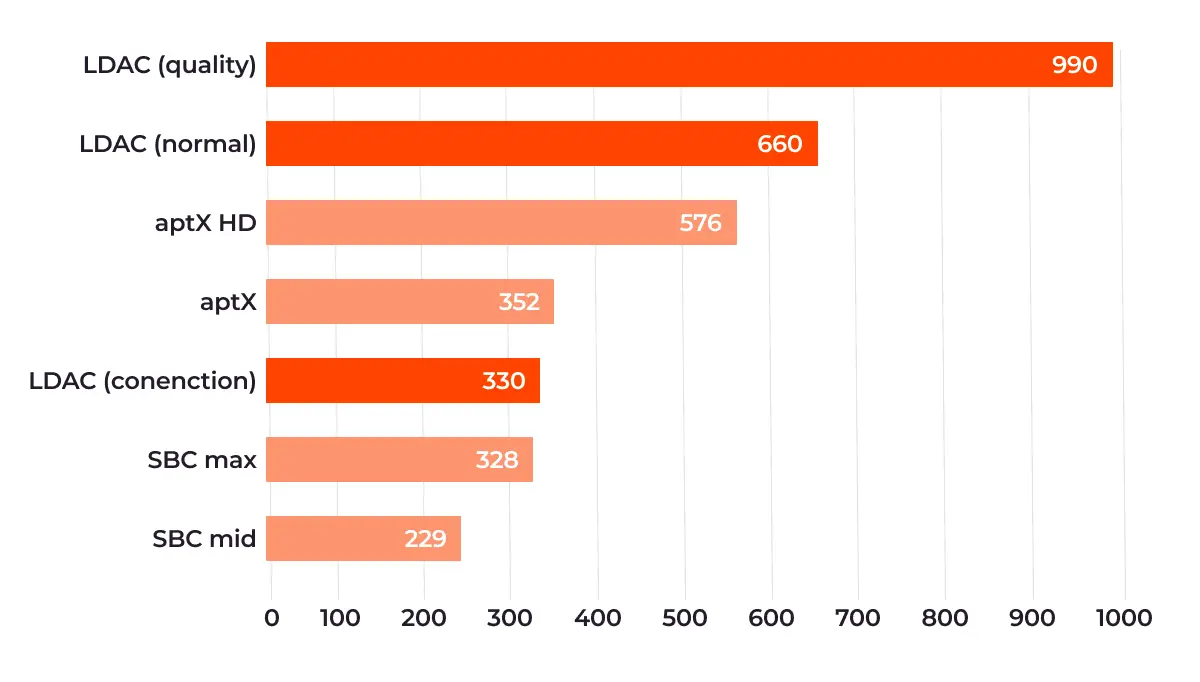
The technology relies primarily on the Advanced Audio Distribution Profile (A2DP), which defines how high-quality audio can be streamed from a source device (like a smartphone) to a sink device (like headphones or speakers). Over the years, Classic Bluetooth Audio has supported various audio codecs, such as SBC (Subband Codec), MP3, and AAC, allowing for moderate-quality stereo streaming with relatively low latency.
Historical Milestones:
2000–2005: Bluetooth 1.0–1.2 introduced basic audio streaming; devices were limited in range and audio quality.<br><
2004–2010: Bluetooth 2.0 + EDR (Enhanced Data Rate) improved throughput, enabling better audio fidelity and smoother streaming.
2010–2020: Bluetooth 3.0 and 4.0 maintained Classic Audio support while adding low-energy capabilities, though LE Audio had not yet arrived.
Present: Classic Audio is still widely used in headphones, car audio, and home devices. It remains backward-compatible but has limitations: it cannot natively support high-resolution audio (e.g., 24-bit/192 kHz), and latency is higher compared to modern LE Audio solutions.
NEXT GENERATION BLUETOOTH LE AUDIO
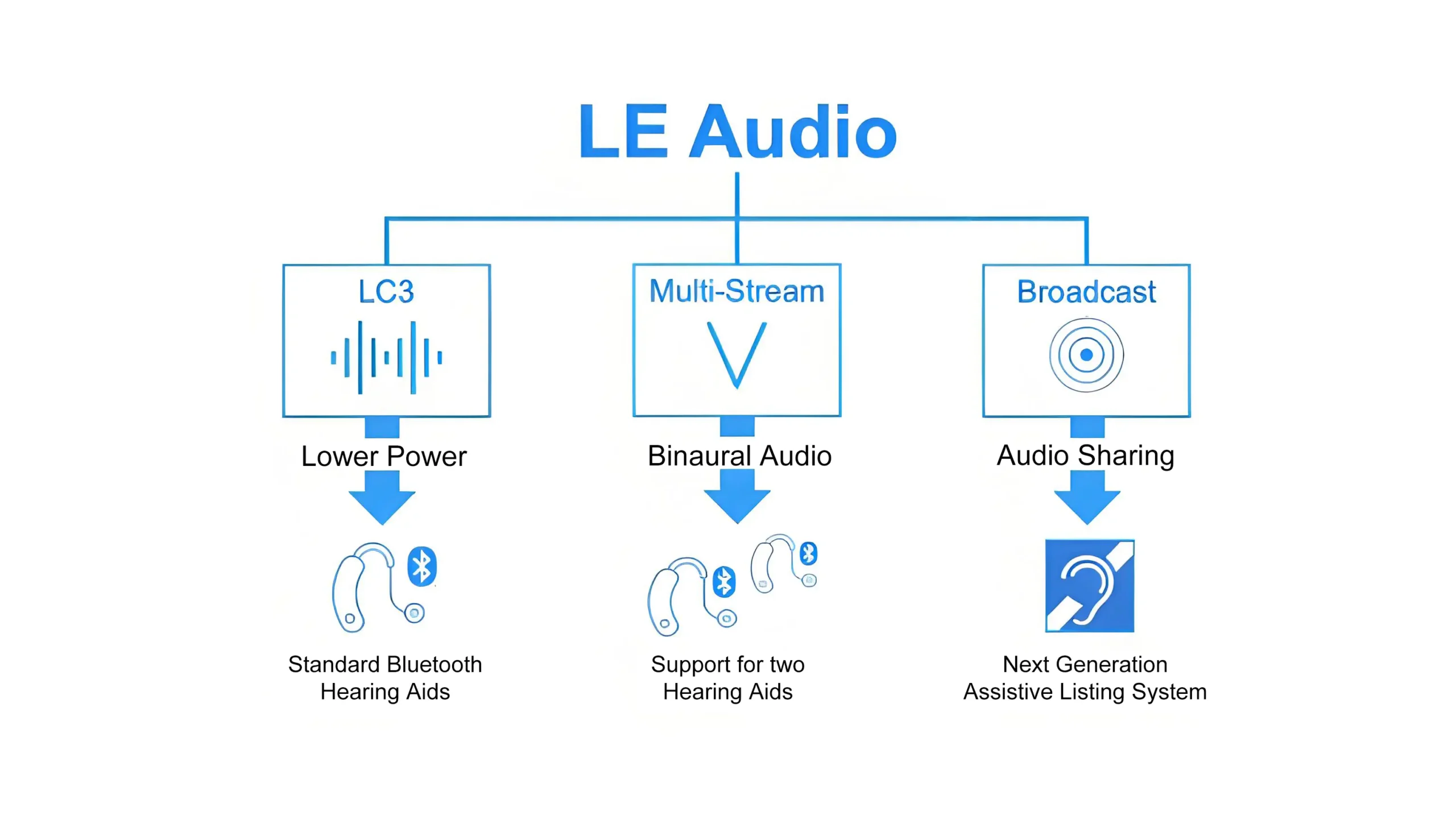
BluetoothLE Audio introduces a new era in wireless sound by enhancing efficiency, quality, and connectivity. Built on Bluetooth Low Energy (BLE) technology, LE Audio not only improves existing Bluetooth audio experiences but also enables entirely new applications and use cases.
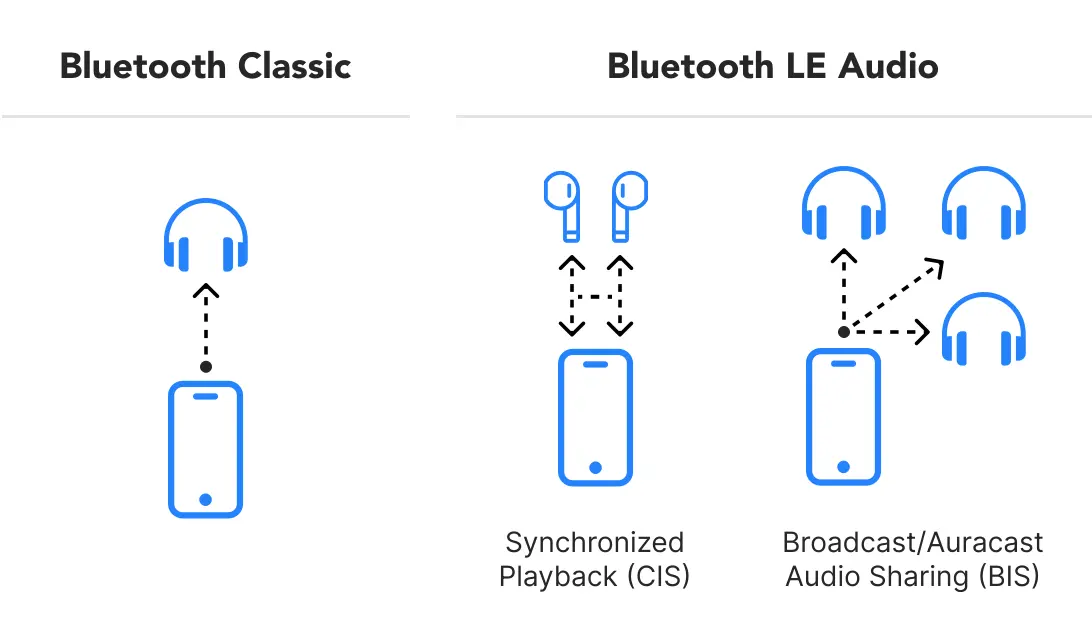
Unlike Classic Audio, which operates on the Bluetooth Classic radio, LE Audio works on the Bluetooth Low Energy radio. This shift brings significant benefits in power consumption, multi-device performance, and broadcast capabilities.
AURACAST™ BROADCAST AUDIO
Auracast™ Broadcast Audio allows users to share their audio with others, creating a new way to connect through sound. It supports public use cases such as museums, airports, and conference rooms — where one transmitter can broadcast audio to many listeners, improving accessibility and engagement.
MULTI-STREAM AUDIO
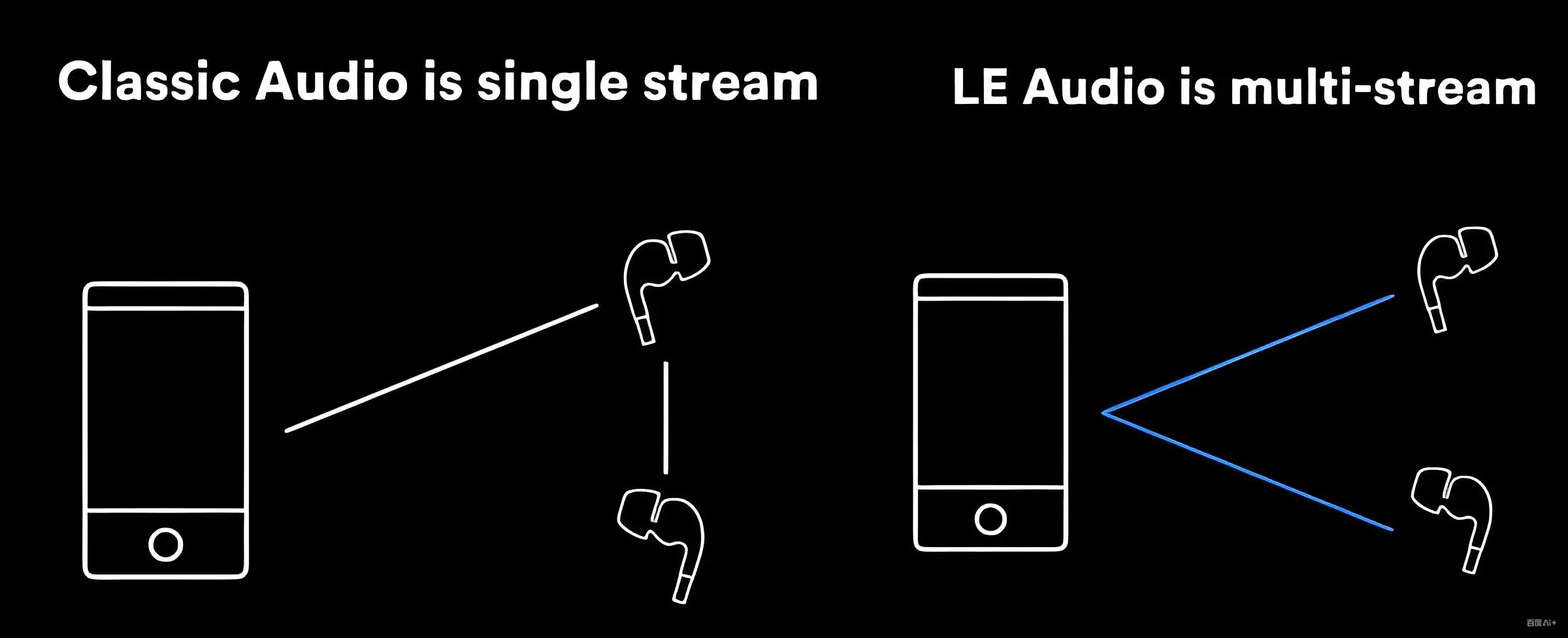
Multi-Stream Audio enables the transmission of multiple, independent, and synchronized audio streams between an audio source and one or more audio sink devices. This improves stereo imaging, voice assistant performance, and seamless device switching — for example, when earbuds connect to both a smartphone and a laptop simultaneously.
LOW COMPLEXITY COMMUNICATION CODEC (LC3)
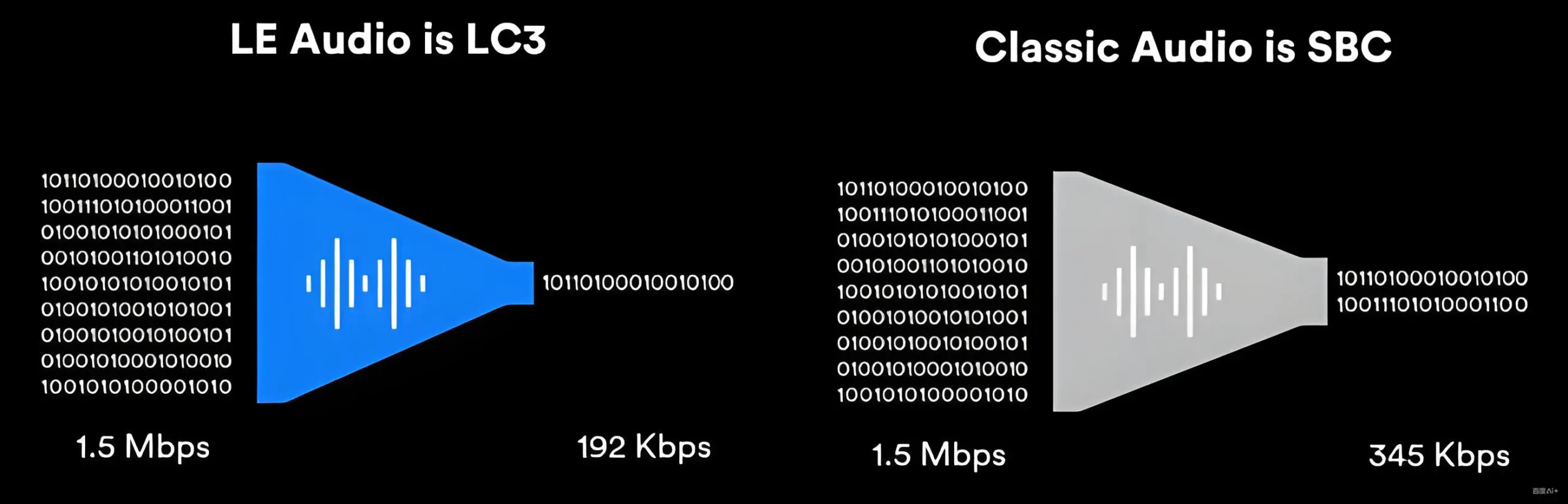
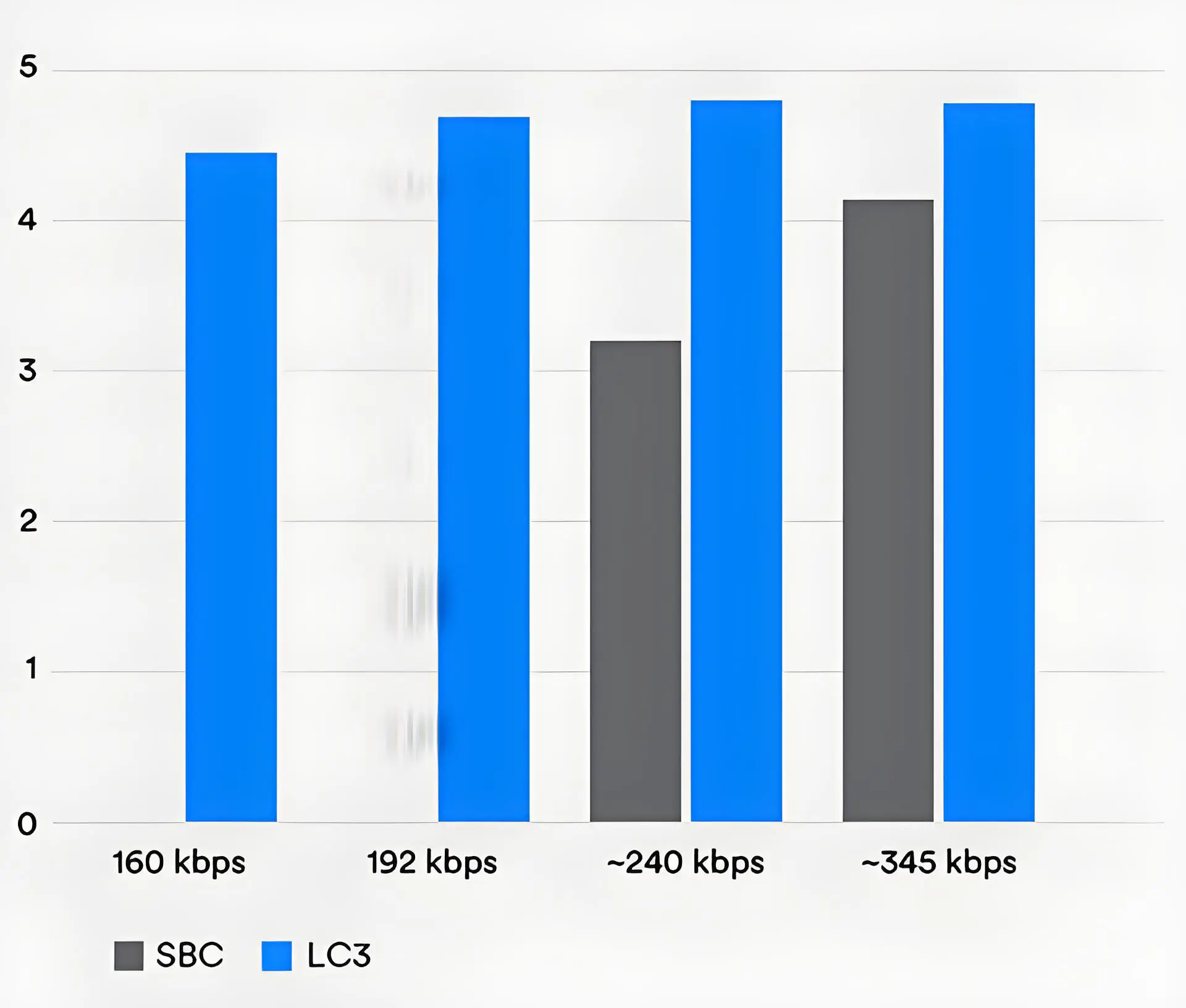
LE Audio introduces LC3 (Low Complexity Communication Codec), a new codec that delivers higher sound quality at lower bitrates compared to the traditional SBC codec. LC3 uses about half the data for the same or better perceived audio quality, resulting in clearer sound, improved efficiency, and extended battery life.
From Classic to Cutting-Edge — AmpVortex Leads the LE Audio Revolution
Most multi-room streaming amplifiers either don’t support Bluetooth Audio at all, or if they do, they only support Classic Bluetooth Audio — a technology designed decades ago with higher latency and lower efficiency. In contrast, AmpVortex amplifiers fully support LE Audio, the next-generation Bluetooth standard. This means you get lower latency, higher sound quality, better power efficiency, and seamless multi-device sharing — delivering a truly modern wireless audio experience that others simply can’t match.
Added to cart
Your Cart Is Empty
0
Check out our shop to see what's available
✕
Scroll to Top
Your amount to pay has been updated
The previous conversion quote has expired. Here is your new quote:

 (317)516-7460
  service@ampvortex.com