
 (317)516-7460
  service@ampvortex.com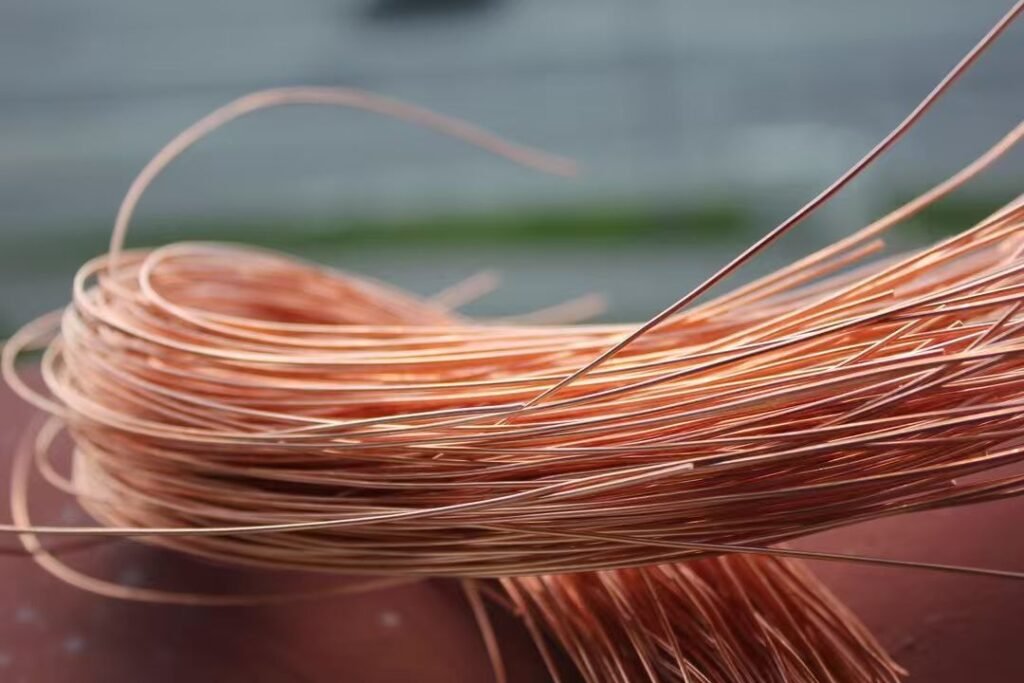
Hi-Fi Myth Avoidance Guide Don’t Waste Money on “Illusory Effects”
1️⃣ Why Cable Myths Persist in the Hi-Fi Market
The Hi-Fi industry is full of strong opinions—especially regarding audio cables.
Some marketing claims suggest dramatic, almost “transformative” sonic improvements from ultra-expensive cables.
In reality:
- Cables matter.
- But their impact is limited.
- System synergy matters far more.
For AmpVortex users, rational cable selection ensures optimal cost-performance without unnecessary investment.
Myth 1: The More Expensive the Cable, the Better the Sound
This is the most common misconception.
Some brands promote ultra-high-priced cables claiming “earth-shaking” improvements.
However:
- In blind listening tests,
- For mid-range systems,
- Differences between high-quality OFC cables and ultra-premium exotic cables are often minimal.
The performance ceiling of a system is primarily defined by:
- Amplifier design
- Speaker quality
- Room acoustics
AmpVortex amplifiers are engineered as high-performance, cost-efficient Hi-Fi systems. Officially matched speaker cables are calibrated to fully release amplifier performance without requiring excessive spending.
Blind testing shows negligible audible difference between properly matched OFC cables and extremely expensive non-matching cables in most real-world setups.
Myth 2: Exotic Materials Create “Magical” Sound
Gold-plated conductors
Pure silver wires
Carbon fiber cables
Special composite materials
These are frequently marketed as revolutionary.
Reality check:
- Gold offers corrosion resistance, not superior conductivity.
- Silver improves conductivity slightly—but at exponentially higher cost.
- Carbon fiber lacks sufficient conductivity for speaker-level power transmission.
Measured results show that, for properly matched systems, high-quality oxygen-free copper already provides stable and accurate signal delivery.
AmpVortex testing confirms that premium exotic materials offer marginal measurable improvement relative to cost increase in typical Hi-Fi environments.
Myth 3: Longer Cables Improve Sound
Physics says the opposite.
Longer cable =
- Higher resistance
- Greater power loss
- Reduced transmission efficiency
Speaker cables should be:
✔ As short as practical
✔ Properly gauged for distance
For example:
If AmpVortex 16100 is installed over 10 meters, 12AWG is mandatory to compensate for distance-related loss.
Using undersized cables over long runs will degrade amplifier performance.
Myth 4: Cables Need “Burn-In”
There is no scientific basis for cable burn-in.
Cable performance is determined by:
- Conductor purity
- Structure
- Manufacturing precision
These characteristics do not change with use.
Perceived “burn-in effects” are typically:
- Listener adaptation
- Psychological bias
- System familiarity
AmpVortex cables undergo testing and stabilization before shipping and perform at full specification from first use.
Myth 5: More Strands = Better Performance
Multi-strand construction reduces skin effect and improves flexibility.
But more strands does not always equal better performance.
Beyond a certain threshold:
- Electrical improvement plateaus
- Cost increases
- Installation becomes more difficult
Optimized strand counts offer the best balance.
AmpVortex optimized configurations:
- 16AWG → 100+ strands
- 14AWG → 200+ strands
- 12AWG → 300+ strands
Balanced for performance, durability, and practicality.
6️⃣ Rational Cable Budgeting Strategy
A practical rule:
Cable budget should not exceed 5% of total system cost.
Sound quality improvement hierarchy:
- Speakers
- Amplifier
- Room acoustics
- Proper cable specification
Cables optimize signal transmission—but they do not redefine system capability.
For AmpVortex users:
✔ Match AWG to power & distance
✔ Choose high-purity OFC
✔ Maintain 8Ω system compatibility
✔ Avoid overspending on exotic hype