
 (317)516-7460
  service@ampvortex.com
Hardware Is the New Firewall: What the Spotify Shadow Library Incident Reveals About Streaming Resilience
Anna’s Archive Shadow Library Attack Spotify
How Modern Audio Technology Keeps Users Safe and Uninterrupted
In late 2025, Spotify made headlines when the shadow library group Anna’s Archive claimed to have scraped hundreds of terabytes of music data and metadata from the platform. While the incident sparked widespread discussion about digital rights, content preservation, and streaming security, one key point quickly became clear: users themselves remained completely unaffected.
The reason? Modern streaming platforms and consumer audio devices are built with multi-layered redundancy, advanced DRM, and distributed delivery systems. Even when backend content is compromised, the end-user experience stays stable.
But beyond platform-level protections, the real unsung heroes are the devices in people’s homes—products engineered to maintain seamless playback, reliable connectivity, and uninterrupted access to music services, even during major industry disruptions.
Core Parties: Profile & Influence.
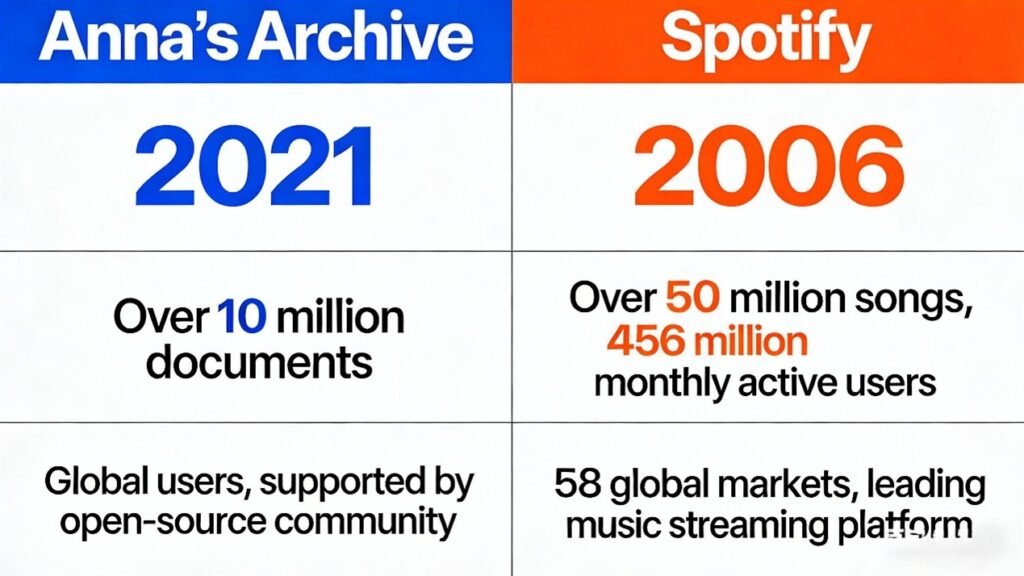
Anna’s Archive (AA)
- Founded: Nov 10, 2022 (post Z‑Library takedown) by anonymous archivists; self‑styled “largest open shadow library meta‑search”
- Mission: “Preserve all human knowledge”; mirrors Sci‑Hub/LibGen/Z‑Library metadata; advocates for open access and cultural preservation
- Scale: By late 2023, 22M+ books, 98M+ articles; 2025 Spotify grab: 300TB audio (86M tracks), 256M metadata records, covering 99.9% of platform plays
- Legal pressure: Blocked in UK (Dec 2024), Belgium (Jul 2025), Germany (Oct 2025); on USTR Notorious Markets List (2023–2025); Google removed 749M+ URLs under DMCA
- Funding: Crypto donations (~$29k by Jul 2023); sells bulk data access to AI firms for training
Spotify
- Founded: Apr 23, 2006 (Sweden); launched Oct 7, 2008; CEO Daniel Ek
- Influence: ~696M MAU (276M paid) in 184 markets (2025 Q2); 32% global music streaming share; 100M+ tracks, 650k+ podcasts
- Business model: Freemium; 2024 revenue ~$156.7B, paid $100B+ in royalties (63.8% of revenue); cumulative royalties near $600B
- Core tech: Proprietary DRM, OGG Vorbis 160kbps streams, global CDN, API rate limiting
Technical Breakdown: How AA Pulled It Off
AA’s Tactics
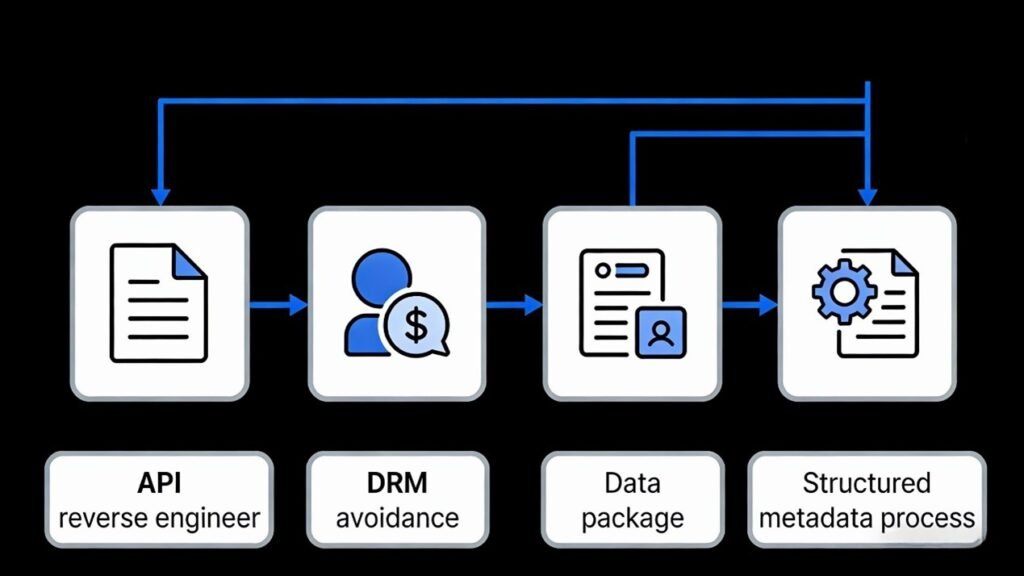
- API reverse‑engineering: Reconstructed full JSON schemas to scrape public metadata at scale
- DRM circumvention: Automated scripts + multi‑account rotation to bypass Spotify’s DRM; distributed crawlers evaded rate limits
- Data packaging: Custom Anna’s Archive Containers (AAC) for efficient P2P distribution; 160kbps OGG Vorbis for top tracks, 75kbps for zero‑play songs
- Structured metadata: 256M records → SQL DB with 186M ISRCs (album/artist/cover art)
Spotify’s Defenses & Gaps
- Strengths: Global CDN, automatic traffic rerouting, account‑level access controls, real‑time anomaly detection
- Weaknesses: API rate‑limit workarounds via distributed nodes; DRM designed for client‑side playback, not mass scraping; metadata over‑exposure in public endpoints
- Response: Disabled compromised accounts; tightened API rate limits; added behavioral monitoring; reinforced DRM key rotation; partnered with anti‑piracy firms
Legal Analysis: Infringement vs. Fair Use
AA’s legal exposure
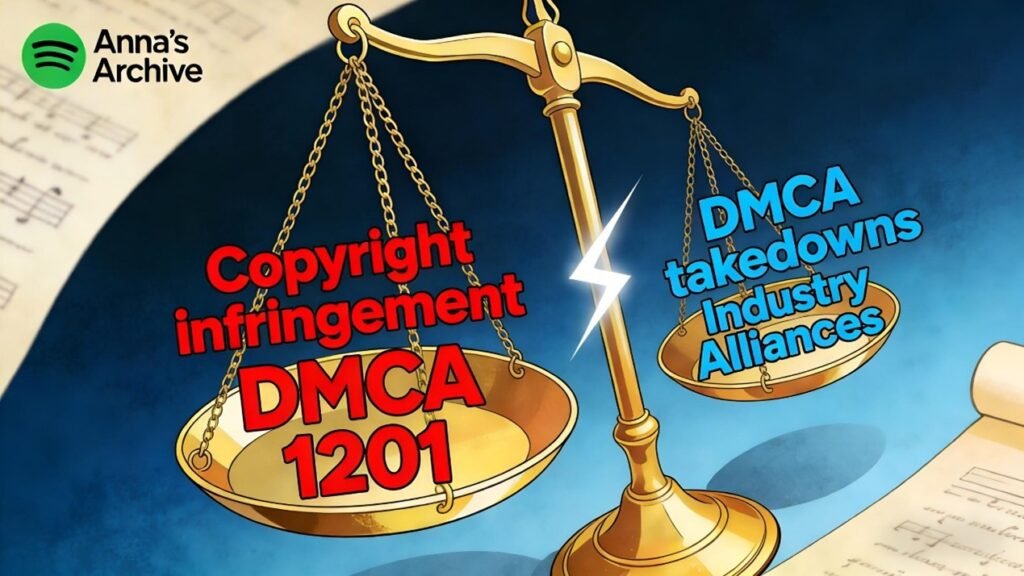
- Primary violations: Copyright infringement (reproduction/distribution without license); circumvention of effective technological measures (DMCA 1201, EUCD); secondary liability for inducing infringement; contempt of court (ignoring blocking orders)
- Jurisdictional challenges: Anonymous operators, multi‑domain/mirror setup, offshore hosting, P2P distribution—enforcement is fragmented and slow
- Defenses: “Preservation” and “fair use” for cultural heritage; transformative use for research/AI training; but courts rarely accept these for mass commercial‑scale infringement
Spotify’s legal position
- Enforcement levers: DMCA takedowns, civil suits for contributory infringement, criminal complaints (where applicable); industry coalitions (IFPI) for global action
- Risks: User data not breached (per Spotify), but copyright holder lawsuits if DRM failures are deemed negligent; reputational damage if fixes are slow
Industry Impact: Short‑ & Long‑Term Shifts
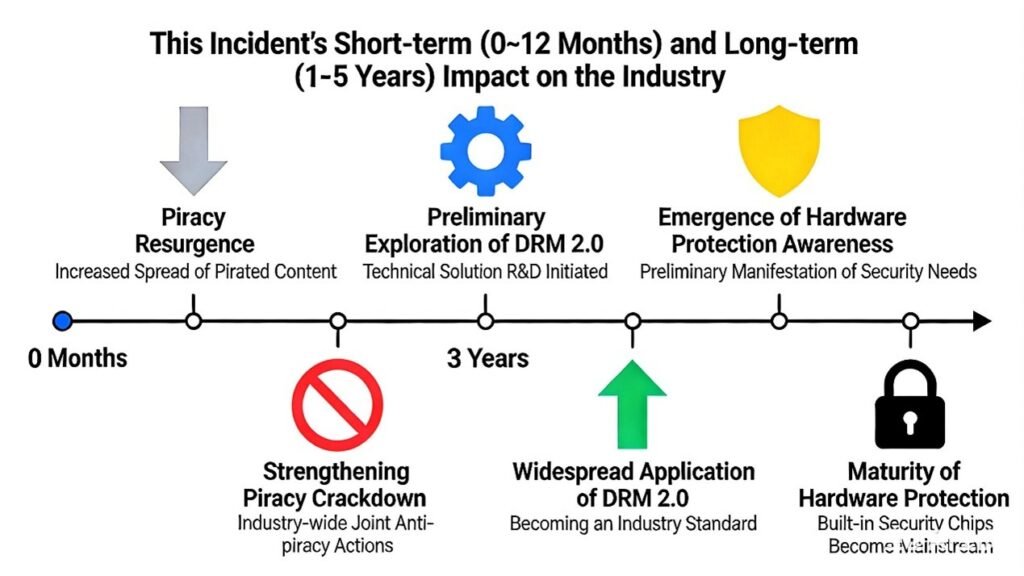
Short‑term (0–12 months)
- Piracy resurgence: P2P availability of 99.9% of high‑play tracks may dent subscriber growth in price‑sensitive markets
- Cost spikes: Platforms (Spotify, Apple Music) will invest more in DRM, API security, and anti‑scraping tools
- User insulation: Hardware with multi‑protocol casting (e.g., AmpVortex 8x Google Cast) keeps playback seamless despite backend issues
Long‑term (1–5 years)
- DRM 2.0: Adoption of hardware‑rooted DRM (e.g., HDCP 2.3), dynamic key rotation, watermarking for tracing leaks
- API lockdown: Stricter authentication, per‑app quotas, real‑time behavior analysis to block crawlers
- Rights holder leverage: Labels may demand better platform security; higher licensing fees to offset piracy risks
- AI training reckoning: AA’s dataset fuels debates on training data legality; platforms may restrict metadata access to curb shadow library/AI misuse
- Hardware as resilience layer: Multi‑protocol devices (AmpVortex G‑series) become a selling point—users prioritize uninterrupted access over single‑service loyalty
Why Users Didn’t Notice a Thing
Spotify’s infrastructure is designed to route traffic across thousands of servers. When malicious crawlers target one access point, the platform automatically shifts loads, blocks suspicious requests, and maintains normal service.
For the average listener, this means:
- No dropped streams
- No login failures
- No interruption to playlists or recommendations
- No degradation in audio quality
The attack affected back-end content repositories, not user-facing systems. As long as the client devices support modern streaming protocols, the music keeps playing.
How Advanced Audio Hardware Prevents Disruption
This is where devices like the AmpVortex series come into play. Designed for the modern streaming era, they include features that ensure continuous playback even if a service experiences technical or security turbulence.
All AmpVortex G-series models come equipped with 8x Google Cast support, ensuring stable multi-room streaming even during high-demand scenarios. The lineup includes:
- AmpVortex-16060G: Delivers 65W per power channel (PPC) with a total output of 16×65W, offering reliable performance for mid-sized home theaters and multi-room setups.
- AmpVortex-16100G: Steps up to 110W per power channel and a total of 16×110W, providing stronger dynamics and headroom for larger speaker configurations.
- AmpVortex-16200G: Features a powerful 210W per power channel and a total of 16×210W, engineered for high-end home cinemas and demanding spatial audio formats.
With their 8x Google Cast capability, all three models maintain smooth, uninterrupted playback across multiple zones—even if streaming platforms experience backend disruptions. This multi-protocol resilience ensures that users can continue enjoying music, podcasts, and spatial audio without noticing any changes in service stability.
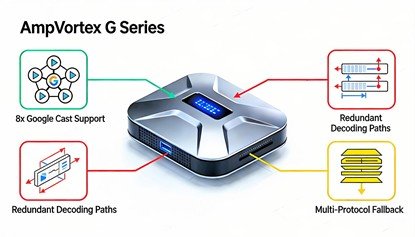
Additional strengths include:
- Redundant decoding paths that switch automatically if one streaming protocol encounters issues
- Robust memory management and background processing that keep apps stable during service outages or API irregularities
- Multi-room synchronization that maintains timing and audio integrity even when network conditions fluctuate
In short, even if a major platform like Spotify faces a large-scale scraping event, AmpVortex devices keep the music playing without interruption.
Why This Matters for the Future of Streaming
The shadow library incident highlights a growing tension in the music industry: between open access and copyright protection, between centralized platforms and decentralized archives.
But for consumers, the priority is simple: music should be accessible, reliable, and high-quality at all times.
This is where hardware innovation plays a critical role. As streaming services evolve, devices must evolve with them. The AmpVortex series is built for this new reality, supporting:
- Dolby Atmos and spatial audio
- High-resolution formats
- Multi-protocol casting
- Low-latency multi-room setups
Even if the industry experiences more security events, technical breakthroughs, or platform shifts, users with modern audio equipment remain insulated from disruption.
The Takeaway
The Spotify shadow library incident is a reminder of how vulnerable content repositories can be—yet it also demonstrates how resilient modern streaming ecosystems have become when responsibilities are properly distributed.
Platforms focus on protecting their back ends through hardened APIs, DRM, and content controls. Devices, meanwhile, safeguard the user experience. As long as hardware continues to evolve independently of any single platform, listeners can continue enjoying music without being hostage to headlines, outages, or policy shifts.
In a streaming-first world, resilience is no longer achieved by software alone.
Key Takeaways
- Preservation vs. Profit Is an Unresolved Tension
Projects like “shadow libraries” may present themselves as cultural archives, but many ultimately monetize access through AI data sales. Legal systems, however, continue to prioritize copyright enforcement over open access. This tension is structural—and unlikely to disappear.
- User Protection Now Lives in Hardware
The most reliable insulation against platform outages or attacks is no longer a single service, but multi-protocol, redundant hardware. Devices that support multiple casting standards, parallel connections, and synchronized multi-zone playback create a buffer between users and platform instability.
This is where architectures like AmpVortex G Series—with multi-protocol support and always-on design—become strategically important rather than optional.
- An Industry-Wide Reset Is Underway
Streaming platforms will continue to harden APIs and DRM to protect content. In parallel, hardware manufacturers will increasingly differentiate themselves on reliability, protocol diversity, and independence from any single ecosystem. “Always on” is becoming a competitive advantage, not a slogan.
Final Thought
The incident serves as a wake-up call:
In a streaming-first world, user experience resilience depends as much on hardware architecture as it does on platform security.
Future-proof home audio systems will be built not on trust in any one platform, but on devices designed to survive change.
No. User-facing services remained uninterrupted due to platform redundancy and resilient playback devices.
Multi-protocol audio hardware insulates users from platform outages, DRM changes, and API disruptions.