
 (317)516-7460
  service@ampvortex.com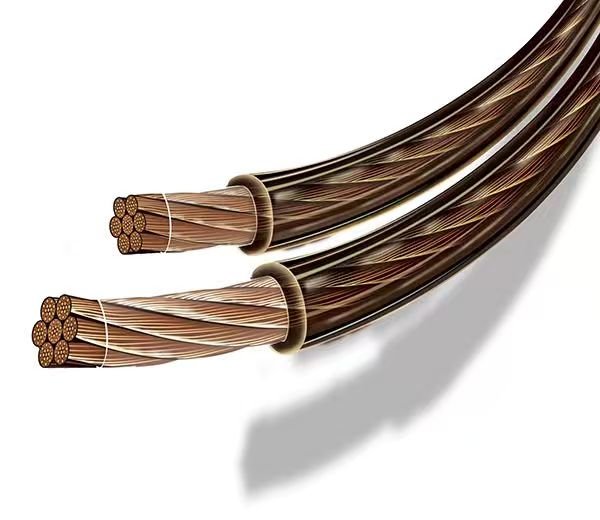
How Do Various Wires in Hi-Fi Audio Systems Improve Sound Quality?
1️⃣ Why Audio Wires Matter More Than You Think
In Hi-Fi audio systems, the role of wires is often underestimated. Many people assume that “all wires are the same” and that investing in higher-quality audio cables is unnecessary.
In reality, different conductor materials, cross-sectional areas, and manufacturing processes directly influence signal transmission efficiency. For high-precision systems such as AmpVortex amplifiers, cable matching is not optional—it is essential. Inferior wires can significantly limit the amplifier’s dynamic range, detail resolution, and overall soundstage performance.
2️⃣ Conductor Materials: The Core of Sound Transmission
The conductor material is the single most important factor in determining audio cable performance.
Common conductor materials include:
- Ordinary copper
- Oxygen-Free Copper (OFC)
- Single-Crystal Copper
- Silver-Plated Copper
Each material exhibits distinct electrical and sonic characteristics.
3️⃣ Ordinary Copper: Entry-Level but Performance-Limited
Ordinary copper contains higher levels of impurities and has relatively higher resistivity.
Effects on sound:
- Increased signal attenuation
- Greater distortion
- Noticeable high-frequency roll-off
- Reduced soundstage layering
For precision amplification systems, such as AmpVortex models, ordinary copper can significantly restrict sound expression and high-frequency detail.
AmpVortex does not recommend ordinary copper cables for any amplifier in its lineup.
4️⃣ Oxygen-Free Copper (OFC): The Optimal Performance Standard
Oxygen-Free Copper contains:
- < 0.003% oxygen
- 99.95% purity
- Lower resistivity (8–15% lower than ordinary copper)
Advantages:
- Reduced signal attenuation
- Stable conductivity
- Improved mid-low frequency solidity
- More accurate tonal reproduction
OFC cables preserve signal integrity and provide balanced performance across the frequency spectrum.
For AmpVortex amplifiers:
✔ Officially recommended material
✔ Used in 12/14/16AWG official cable guidance
✔ Ideal balance of performance and cost
5️⃣ Single-Crystal Copper: Advanced Hi-Fi Upgrade
Single-crystal copper eliminates grain boundaries found in traditional copper structures.
Why this matters:
- Grain boundaries cause signal scattering
- Scattering affects signal purity
- Especially critical for high-frequency harmonics
Benefits:
- Smoother signal transmission
- Lower resistivity than OFC
- Enhanced high-frequency transparency
- More refined detail retrieval
For users seeking premium Hi-Fi performance with AmpVortex amplifiers, single-crystal copper is a strong upgrade option—particularly for systems emphasizing high-frequency precision and airiness.
6️⃣ Silver-Plated Copper: Enhanced High-Frequency Performance
Silver has the lowest resistivity among common conductor metals.
Silver-plated copper:
- Improves high-frequency transmission
- Reduces skin effect
- Increases clarity and brilliance
However:
- Sound may become overly bright
- System matching becomes critical
- Higher cost with diminishing returns for standard systems
AmpVortex advises careful pairing—silver-plated copper should be matched with warmer speakers to maintain tonal balance.
For most users, high-quality OFC remains the most rational and stable choice.
7️⃣ Matching Material with AWG Specification
No matter which conductor material is chosen, the AWG specification must align with:
- Amplifier power output
- Speaker sensitivity
- Wiring distance
Material quality cannot compensate for incorrect cable gauge selection.
For AmpVortex amplifiers:
- 12AWG → High-power / long distance
- 14AWG → Standard home installations
- 16AWG → Short runs / desktop setups
Correct material + correct gauge = optimal performance.