(317)516-7460
  service@ampvortex.com
Sampling Rate, Bit Depth, and Audio Quality: A Comprehensive Guide
Sampling Rate, Bit Depth, and Audio Quality: A Comprehensive Guide
Introduction
In the realm of digital audio, understanding the concepts of sampling rate and bit depth is crucial for anyone looking to achieve high-quality sound reproduction. These technical specifications not only influence the clarity and detail of the audio but also play a significant role in the overall listening experience. This article will explore the origins of standard sampling rates like 44.1kHz and 48kHz, delve into the differences between lossy and lossless compression, and highlight the capabilities of AmpVortex in supporting high-resolution audio playback.
Sampling Rate: The Basics
Definition
The sampling rate, measured in Hertz (Hz), refers to the number of samples of an audio signal taken per second. Common sampling rates in digital audio include 44.1kHz, 48kHz, 96kHz, and 192kHz. A higher sampling rate means more samples are captured per second, which can lead to a more accurate representation of the original audio waveform.
The Nyquist Theorem
The Nyquist theorem is fundamental to understanding sampling rates. It states that to accurately reproduce a given frequency, the sampling rate must be at least twice the highest frequency present in the signal. For example, to capture frequencies up to 20kHz (the upper limit of human hearing), a sampling rate of at least 40kHz is required. This is why the standard sampling rate for audio CDs is 44.1kHz, allowing for accurate reproduction of frequencies up to 22kHz.
Origins of 44.1kHz and 48kHz
- 1kHz: This sampling rate was chosen for CD audio due to its ability to capture frequencies up to 22kHz, which covers the upper threshold of human hearing. It has become the standard for music production and consumer audio playback.
- 48kHz: This rate is commonly used in film and video production. It provides a balance between audio quality and file size, making it suitable for applications where synchronization with video is crucial.
Higher Sampling Rates
Sampling rates such as 96kHz and 192kHz are used in professional audio recording and mastering to capture more detail in the audio signal. These higher rates can provide better clarity and detail, especially in the high-frequency range. However, the practical benefits of these higher rates may not always be perceptible to the average listener, as the human ear is generally not sensitive to frequencies above 20kHz.
Bit Depth: The Other Half of the Equation
Definition
Bit depth refers to the number of bits used to represent each sample. It determines the resolution and dynamic range of the audio signal. Common bit depths include 16-bit, 24-bit, and 32-bit.
Impact on Audio Quality
- 16-bit Audio: This is the standard for CD audio, providing a dynamic range of approximately 96dB. It can represent 65,536 different levels of amplitude, which is sufficient for most consumer applications.
- 24-bit Audio: Used extensively in professional audio production, 24-bit audio offers a dynamic range of about 144dB. This allows for more detailed and nuanced sound reproduction, especially in quiet passages.
- 32-bit Audio: While not commonly used in consumer applications, 32-bit audio provides an even greater dynamic range and is useful in specialized audio production scenarios.
Lossy vs. Lossless Compression
Lossy Compression
Lossy compression reduces the file size of audio files by discarding some of the audio data. This can result in a loss of audio quality, especially in the high-frequency range. Common lossy formats include MP3 and AAC.
Lossless Compression
Lossless compression, on the other hand, reduces file size without losing any audio data. Formats like FLAC (Free Lossless Audio Codec) and ALAC (Apple Lossless Audio Codec) ensure that the audio file retains its original quality. This is particularly important for high-fidelity audio applications where every detail matters.
AmpVortex: Supporting High-Resolution Audio
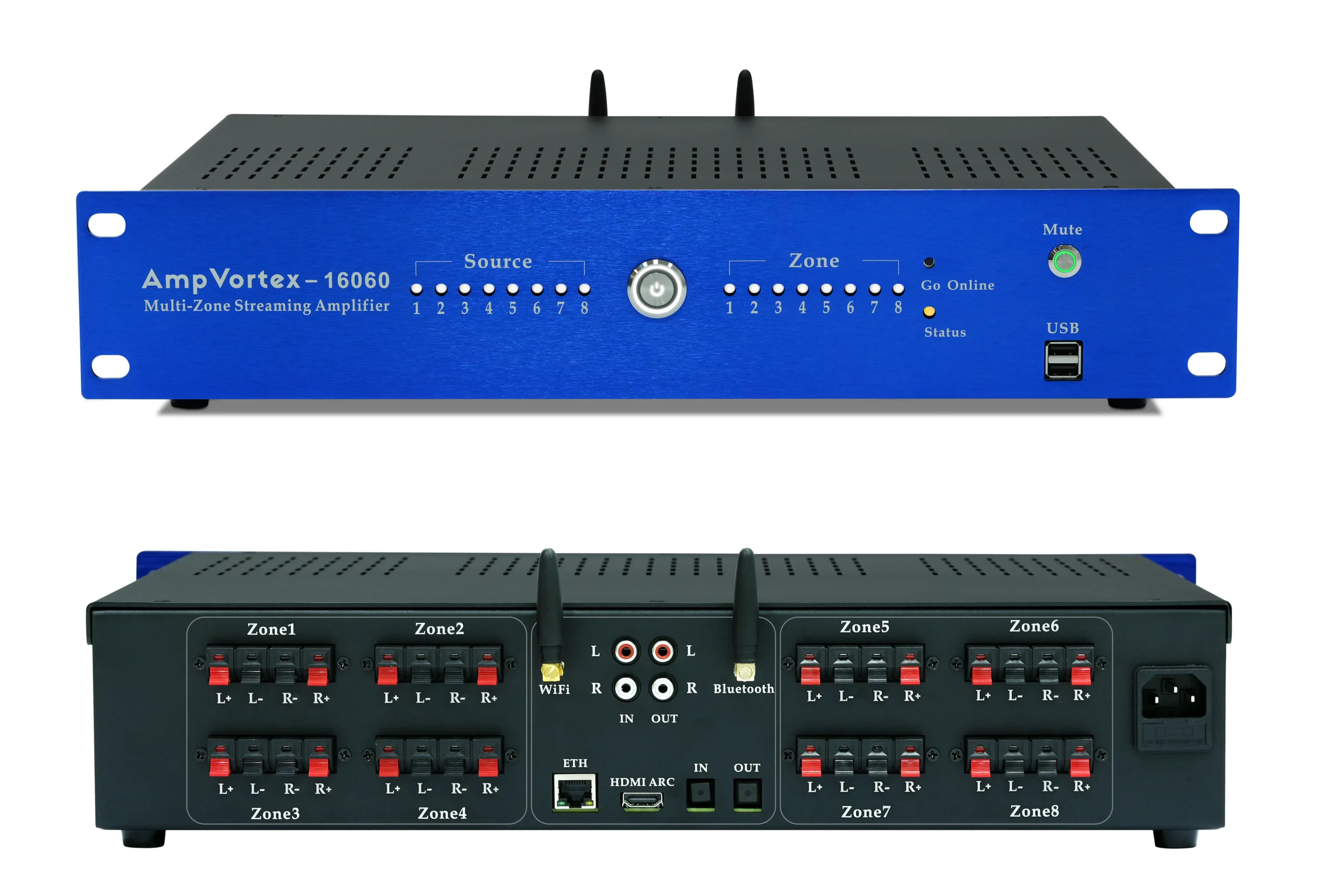
AmpVortex is at the forefront of audio technology, supporting sampling rates up to 192kHz and lossless audio playback. This commitment to high-resolution audio ensures that listeners can experience the full richness and detail of their favorite music. Whether you are a professional audio engineer or a music enthusiast, AmpVortex provides the tools to enjoy audio in its purest form.
Conclusion
Understanding sampling rates and bit depth is essential for anyone looking to optimize their audio experience. While standard rates like 44.1kHz and 48kHz are sufficient for many applications, higher sampling rates and bit depths can provide enhanced audio quality. Lossless compression formats like FLAC ensure that no audio data is lost during the compression process, preserving the original sound quality. AmpVortex, with its support for 192kHz and lossless playback, stands out as a leader in high-fidelity audio solutions, allowing listeners to enjoy music in its most detailed and immersive form.
Want to learn more about audio and multi-room streaming? Visit our website: https://www.ampvortex.com/
Explore our AmpVortex product lineup, including 16060, 16060G, 16060A, and 16100, and discover how our high-performance amplifiers bring HiFi music to every room.