
 (317)516-7460
  service@ampvortex.com
How to select a Best multi-room streaming amplifier
How to Select a Best Multi-Room Streaming Amplifier
Choosing the right multi-room streaming amplifier can make the difference between a frustrating setup and a seamless whole-home audio experience. With so many options on the market, it’s important to focus on the features that will impact performance, compatibility, and flexibility the most. Below are the key points to consider when making your decision.
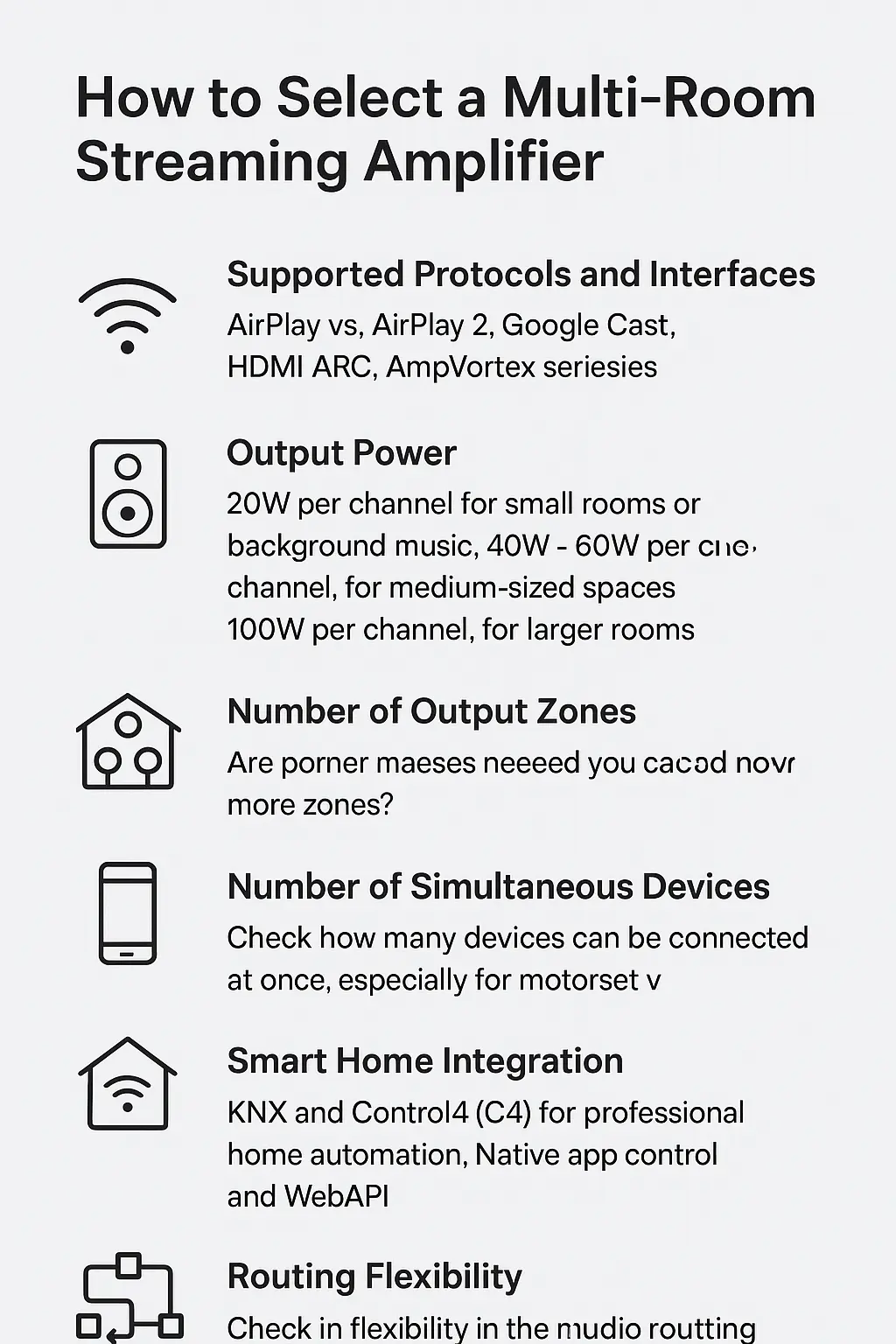
1. Supported Protocols and Interfaces
The first thing to check is which streaming protocols and connection interfaces the amplifier supports. For example:
- AirPlay vs. AirPlay 2– AirPlay 2 adds multi-room synchronization, better buffering, and improved stability compared to AirPlay 1.
- Google Cast– Essential for Android users who want direct streaming.
- HDMI ARC– A must-have if you plan to connect the amplifier to your TV for seamless audio integration.
The AmpVortex series supports all of these, ensuring compatibility with a wide variety of ecosystems.
2. Output Power
Amplifiers come in different power ratings, typically measured in watts per channel (WPC). Consider your speakers and room size:
- 20W per channel– Good for small rooms or background music.
- 40W – 60W per channel– Suitable for medium-sized spaces.
- 100W per channel– Ideal for larger rooms or high-demand speakers.
Choosing the right power ensures your system delivers clear sound without distortion.
3. Number of Output Zones
How many zones (independent areas with speakers) do you need to power? Options range from 6 to 8 zones in a single unit. Another key question: can the system cascade (expand) if you want to add more zones in the future? Flexibility here will save you from needing to replace your entire setup later.
4. Number of Simultaneous Devices
Most multi-room streaming systems are controlled by smartphones or tablets. Check how many devices can be connected at once. If you have a family or multiple users in the house, you’ll want an amplifier that allows several phones to manage playback simultaneously.
5. Smart Home Integration
A modern amplifier should fit seamlessly into your smart home ecosystem. Look for support such as:
- KNX and Control4 (C4) for professional home automation.
- Native App controlfor everyday use.
- WebAPIfor developers or advanced integrations.
This ensures your amplifier isn’t just a standalone device, but part of your smart home hub.
6. Routing Flexibility
Finally, check how flexible the audio routing is. Some amplifiers don’t allow mixing sources, limiting what can be played in different zones. A good multi-room amplifier should give you the freedom to route music flexibly—whether that’s the same playlist in the whole house, or different tracks in different rooms.
Final Thoughts
A multi-room streaming amplifier is the heart of a whole-home audio system. By considering protocol support, output power, zone scalability, multi-device control, smart home compatibility, and routing flexibility, you can make sure you choose a system that not only meets your needs today but also grows with you tomorrow.
The AmpVortex series checks all these boxes, making it a strong choice for anyone who wants powerful, flexible, and future-proof home audio.