(317)516-7460
  service@ampvortex.com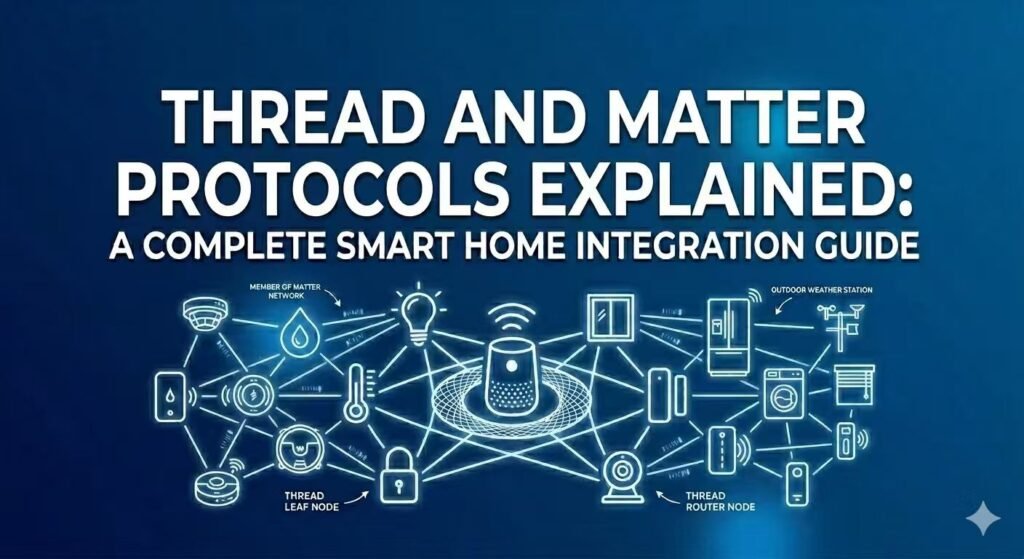
Thread and Matter Protocols Explained: A Complete Smart Home Integration Guide
Thread and Matter Protocols Explained: A Complete Guide for Smart Home & Audio Integration
Published on [www.ampvortex.com] | Your Trusted Source for Smart Multi-Zone Audio & Home Automation Tech
In the fast-evolving smart home landscape, seamless connectivity and cross-device compatibility are non-negotiable. Two game-changing technologies—Thread and Matter—have emerged to solve the industry’s biggest pain points: fragmented ecosystems, unreliable device communication, and high power consumption. For homeowners, installers, and smart home enthusiasts alike, understanding how Thread and Matter work (alone and together) is key to building a robust, future-proof smart home system—especially for integrated solutions like multi-zone audio, lighting, and climate control.
Below, we break down the core of Thread and Matter, their unique strengths, how they complement each other, and why they’re critical for the next generation of smart home tech—including AmpVortex’s multi-room streaming amplifiers and KNX-integrated audio systems.
What Is Thread? The Low-Power Mesh Network for Smart Home Devices
Thread is a low-power, low-latency mesh networking protocol engineered exclusively for smart home and IoT devices. Unlike Wi-Fi, which relies on a central router and drains battery life, Thread creates a dedicated, self-sustaining wireless network for connected devices—no internet required for local communication. It’s built for devices that operate in standby mode for long periods (e.g., sensors, locks) and only transmit small data packets when needed, making it ideal for the always-on, energy-efficient demands of modern smart homes and commercial audio setups.
Core Key Features of the Thread Protocol
Ultra-Low Power Consumption
Thread is optimized for battery-powered devices (e.g., motion sensors, door/window detectors, smart thermostats). Devices can sleep for extended periods, waking only to send/receive data—dramatically extending battery life and reducing maintenance for long-term smart home use.
Self-Healing Mesh Network
Thread devices connect peer-to-peer, forming a mesh network where every powered device (e.g., smart bulbs, wall outlets, AmpVortex multi-zone amplifiers) acts as a router. If one device or connection drops, the network automatically reroutes traffic through other nodes, ensuring zero downtime and reliable communication across large homes or commercial spaces.
High Scalability (250+ Devices)
A single Thread network supports up to 250+ connected devices—more than enough for even the most advanced smart homes with multi-zone audio, lighting, security, and climate control systems.
No Central Hub Required
Thread devices communicate directly with one another, eliminating the need for a proprietary central hub. This reduces single points of failure and simplifies system setup for installers and homeowners alike.
Open Standard & Bank-Level Security
Built on open, industry-recognized standards (IEEE 802.15.4), Thread features end-to-end encryption, ensuring secure data transmission for smart home devices—critical for privacy and safety in connected living spaces.
Thread Border Router: The Internet Bridge
While Thread networks run independently for local device communication, a Thread Border Router is required to connect the mesh network to the internet/Wi-Fi. This small, powered device lets you control your Thread smart home remotely (e.g., via a phone app) and integrate Thread devices with cloud-based services. Popular Border Router options include smart speakers, Wi-Fi routers, and home automation hubs—AmpVortex amplifiers act as powered Thread routers, extending your mesh network seamlessly.
Common Thread-Enabled Smart Home Devices
Motion, temperature, and humidity sensors
Smart door locks, window sensors, and security alarms
Smart light bulbs, wall switches, and dimmers
Smart thermostats and HVAC control systems
Wired smart home hardware (e.g., multi-zone audio amplifiers, KNX keypads, Control4 controllers)
What Is Matter? The Universal Smart Home Compatibility Standard
Matter (formerly known as Project Connected Home over IP) is the universal application-layer protocol for smart home devices—created to fix the industry’s biggest pain point: ecosystem fragmentation. For years, smart home devices from Apple, Amazon, Google, and other top brands worked only with their proprietary platforms, forcing users to choose a single ecosystem and limiting device choice for integrated setups.
Developed by the Connectivity Standards Alliance (CSA) (backed by Apple, Amazon, Google, Samsung, and hundreds of other tech and home automation companies), Matter is a free, open standard that unifies smart home communication. It defines a common “language” for all smart devices, so a Matter-certified bulb from one brand works seamlessly with a Matter-certified speaker, amplifier, or thermostat from another—no matter the original connectivity protocol.
How Matter Works – The Layered Smart Home Network Architecture
Matter sits at the application layer of the smart home network stack, governing how devices communicate and share data with one another. It works with multiple underlying transport layer protocols (the “physical” ways devices connect), including:
Thread (ideal for low-power mesh devices and large spaces)
Wi-Fi (for high-bandwidth devices like smart TVs, multi-zone amplifiers)
Bluetooth Low Energy (BLE) (for device onboarding and short-range communication)
Ethernet (for wired smart home hardware like KNX controllers, AmpVortex amplifiers)
This layered approach means Matter is protocol-agnostic—it doesn’t replace Thread, Wi-Fi, or BLE; it unifies them under a single, universal communication standard. The full smart home network stack breaks down as four core layers:
Cloud/Ecosystem Layer: Cloud platforms (Apple HomeKit, Amazon Alexa, Google Home) for remote control and automation
Application Layer: Matter (the universal “language” for all smart device communication)
Network/Transport Layer: Thread, Wi-Fi, BLE, Ethernet (the physical connection methods)
Physical Layer: The actual hardware (sensors, amplifiers, switches, keypads)
Core Key Features of the Matter Protocol
Cross-Ecosystem Compatibility (No More Lock-In)
The biggest benefit of Matter: one device, all ecosystems. A Matter-certified AmpVortex multi-room streaming amplifier, for example, works natively with Apple HomeKit, Amazon Alexa, and Google Home—no extra hubs, software, or workarounds required.
Simplified Device Setup & Onboarding
Matter uses a standardized onboarding process (via BLE or Thread) that works with all major smart home apps. No more confusing brand-specific setup steps—just scan a QR code and connect your device in seconds.
Local + Cloud Control (Low-Latency Automation)
Matter prioritizes local device communication (via Thread/Wi-Fi) for fast, reliable automation (e.g., “turn on the living room audio when the front door unlocks”). Cloud control is still available for remote access, but local communication eliminates internet-dependent lag and downtime.
Future-Proof Certification
Matter-certified devices are guaranteed to work with new Matter updates and future smart home tech—so your investment in a Matter-enabled audio system, lighting, or security setup won’t become obsolete as the industry evolves.
Scalable for Homes & Small Commercial Spaces
Matter supports hundreds of connected devices, making it perfect for large residential properties (3+ floors, multi-zone audio) and small commercial spaces (cafés, offices, retail stores) with integrated smart systems.
Thread vs. Matter – Key Differences (They’re Not Competitors!)
A common misconception is that Thread and Matter are competing technologies—they’re not. In fact, they’re designed to work hand-in-hand, and their combination creates the most robust, reliable smart home system available today. The simplest way to distinguish between Thread and Matter is this core rule:
Matter is the language smart devices use to talk to each other. Thread is the tool (mesh network) that lets them talk efficiently, with low power and high reliability.
Thread vs. Matter – At-a-Glance Comparison Table
| Feature | Thread Protocol | Matter Protocol |
| Protocol Layer | Network/Transport Layer (how devices connect) | Application Layer (how devices communicate) |
| Primary Goal | Create a low-power, self-healing mesh network for local device connection | Unify smart home ecosystems with a universal communication standard |
| Power Usage | Ultra-low power (ideal for battery-powered devices) | Protocol-agnostic (works with low/high-power connection methods) |
| Ecosystem Lock-In | No—open standard, works with all platforms | No—eliminates lock-in (core design purpose) |
| Device Compatibility | Only Thread-enabled devices (mesh network) | All Matter-certified devices (any underlying protocol) |
| Internet Required | No (local communication only); Border Router for internet access | No (local communication); cloud access optional for remote control |
| Key Use Case | Large homes/commercial spaces, battery-powered sensors | Cross-brand device integration, seamless smart home automation |
In short: Matter makes smart devices compatible with one another; Thread makes their connection efficient, reliable, and low-power.
Thread + Matter – The Ultimate Smart Home Combination
When paired together, Thread and Matter solve the two biggest smart home challenges: cross-brand compatibility and reliable, low-power connectivity. This combination is especially powerful for integrated smart home systems (e.g., multi-zone audio, lighting, and climate control) where multiple devices need to communicate quickly, reliably, and across brands—like the AmpVortex multi-room streaming amplifiers that integrate with KNX, Control4, Alexa, and all major smart home protocols.
Why Thread + Matter Is a Game-Changer for Smart Audio & Home Automation
Seamless Multi-Device Automation (No Lag)
Imagine this: Your Thread-enabled motion sensor detects you walk into the living room → Matter sends the universal signal to your AmpVortex amplifier → the amplifier automatically turns on your favorite music (via AirPlay/Spotify) and adjusts the volume—all locally, with no lag, and no need for a single proprietary ecosystem. This is the power of Thread + Matter: fast, reliable automation for all your smart devices, including your core audio system.
Low Power, High Reliability for Large Spaces
For 3+ floor homes or commercial spaces with multi-zone audio, Thread’s mesh network ensures your AmpVortex amplifiers, KNX keypads, and smart sensors communicate flawlessly—even if one device is out of Wi-Fi range. Matter ensures all these devices work together seamlessly, regardless of their brand or original connectivity protocol.
Future-Proof Your Smart Home Investment
Thread and Matter are the de facto industry standards for the next generation of smart home tech. Every major brand (Apple, Amazon, Google, Samsung) and home automation leader (KNX, Control4) is adopting these protocols, meaning your Thread + Matter-enabled AmpVortex audio system will work with new smart devices for years to come.
Simplified Installation & Maintenance for Installers
For professional installers, Thread + Matter eliminates the need for multiple hubs, proprietary software, and brand-specific setup steps. A single Thread mesh network (with a Border Router) and Matter-certified hardware (like AmpVortex amplifiers) make smart home installation faster and more cost-effective—with less maintenance and fewer technical issues for your clients.
The Future of Thread & Matter in Smart Home Tech
While Thread and Matter are still relatively new technologies, their industry adoption is accelerating at a rapid pace. The CSA now has over 900 member companies, and thousands of Matter-certified devices are already on the market—including smart audio gear, lighting, security systems, and home automation hardware.
For the smart audio industry in particular, Thread + Matter is a game-changer. It lets multi-zone streaming amplifiers (like AmpVortex) integrate seamlessly with every major smart home ecosystem and low-power smart device—creating a truly end-to-end smart audio experience that’s easy to set up, incredibly reliable, and built for the future.
As more devices become Thread and Matter certified, the smart home will finally live up to its promise: a single, unified system where all your devices work together seamlessly, no matter the brand. And for homeowners and installers alike, that means less frustration, more flexibility, and a smarter home that grows with your needs.
Thread & Matter with AmpVortex – Smart Audio, Perfectly Integrated
At AmpVortex, we design our multi-room streaming amplifiers for the future of smart home tech—and that means full native support for Thread, Matter, KNX, Control4, Alexa, and all major smart home protocols. Our amplifiers act as powered Thread routers (extending your Thread mesh network to cover larger spaces) and are fully Matter-certified, so they work seamlessly with every Matter-enabled smart device and ecosystem on the market.
AmpVortex’s Thread + Matter Smart Audio Benefits
Whether you’re building a 3-floor luxury smart home with multi-zone audio, lighting, and climate control, or a small commercial space with integrated smart audio, AmpVortex amplifiers leverage Thread + Matter to deliver:
Seamless cross-ecosystem integration (Apple HomeKit, Amazon Alexa, Google Home—no extra gear required)
Reliable, low-latency audio control via Thread’s self-healing mesh network (perfect for large spaces)
Easy integration with KNX, Control4, and other professional home automation systems
Future-proof hardware that works with new smart home devices and protocol updates for years to come
Amplifier as a Thread Router – extend your mesh network without adding extra hardware or hubs
Frequently Asked Questions (FAQs) – Thread & Matter Protocols
Q: Do I need a Thread Border Router to use Thread devices?
A: For local device communication (e.g., device-to-device automation like “turn on audio when a door unlocks”), no—Thread networks work independently without the internet. For remote control (via your phone app outside the home) and integration with Wi-Fi/cloud services, yes—a Thread Border Router is required. AmpVortex amplifiers act as powered Thread routers, adding to your network’s coverage and reliability.
Q: Are all Thread devices compatible with Matter?
A: Most modern Thread devices are either Matter-certified or can be updated via firmware to support Matter. Always check for the official Matter Certification Badge when purchasing smart home devices to ensure full compatibility.
Q: Can Matter work without Thread?
A: Yes! Matter is protocol-agnostic and works with Wi-Fi, BLE, and Ethernet—Thread is simply the best low-power mesh option for large smart homes, battery-powered devices, and commercial spaces where reliability and range are critical.
Q: Does AmpVortex support both Thread and Matter protocols?
A: Yes! All AmpVortex multi-room streaming amplifiers are fully Matter-certified and act as powered Thread routers. This makes our amplifiers the perfect core for your Thread + Matter smart home system—unifying your audio with all other smart devices seamlessly.
Q: What’s the difference between Matter and Bluetooth/Wi-Fi?
A: Matter is not a replacement for Bluetooth/Wi-Fi/Thread—it’s a universal communication standard that runs on top of these protocols. Bluetooth/Wi-Fi/Thread are how devices connect physically, while Matter is how they talk to each other in a universal language.
Related Articles (Smart Home & Audio Integration)
KNX Integration with AmpVortex: A Complete Guide for Smart Home Installers
Multi-Zone Audio Setup: How to Build a Future-Proof Smart Audio System
AmpVortex vs. Traditional Amplifiers: Smart Home Compatibility Matters
Smart Home Audio Automation: KNX, Thread, Matter & Control4 Integration