(317)516-7460
  service@ampvortex.com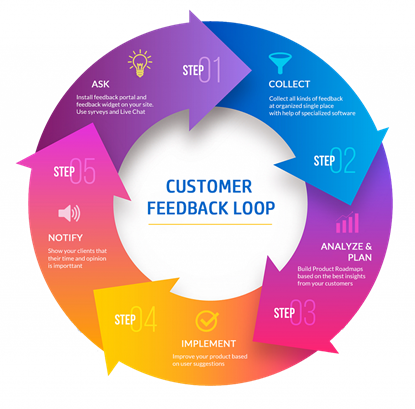
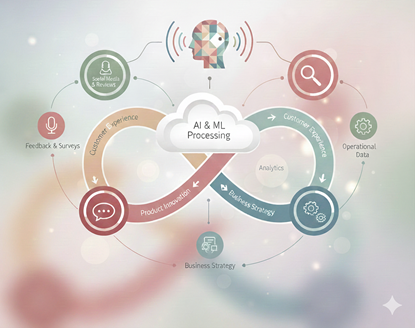
Turning Customer Feedback Into Business Impact
An Installer-Focused Perspective on Why AmpVortex Stands Out
In professional AV and smart-home installations, product value is defined by deployment flexibility, integration depth, and long-term reliability — not marketing claims.
AmpVortex is engineered from the ground up based on real-world installer feedback. Many of its most practical capabilities exist because integrators asked for them in live projects, not because they appeared on a feature checklist.
Below are three real examples where customer and installer requirements directly shaped AmpVortex’s system architecture.
Use Case 1: Multi-Input Architecture for a Single Audio Zone (Karaoke & Mixed-Source Scenarios)
An installer in the United States approached us with a common but often poorly solved requirement:
A single zone needs to reproduce background music and live vocal input simultaneously, with independent signal paths.
Typical solutions require:
- External audio mixers
- DSP units
- Additional control points
- Increased failure risk and installation time
AmpVortex implementation
AmpVortex firmware and hardware architecture were extended to support:
- Multiple physical and/or digital inputs assigned to one output zone
- Independent source handling without external mixing hardware
- Zone-level control handled directly by the amplifier
Installer benefits
- Reduced rack complexity
- Fewer third-party devices
- Cleaner signal chain
- Faster commissioning and easier maintenance
This capability now supports Karaoke rooms, hospitality spaces, showrooms, and flexible entertainment environments.
Use Case 2: Native High-Resolution Audio Support (Qobuz, 192kHz, Lossless)
A recurring request from integrators and end users was clear:
“We deploy systems for clients who demand high-resolution, lossless audio — without compromises.”
Many multi-room platforms restrict high-resolution playback to:
- Limited models
- Paid firmware upgrades
- External streamers
AmpVortex implementation
Across all four AmpVortex models, we enabled:
- Native lossless audio playback
- Support for up to 192kHz sampling rates
- Compatibility with high-resolution services such as Qobuz
- No additional licensing or activation fees
Installer benefits
- One platform for both standard and audiophile-grade projects
- No need to upsell external DACs or streamers
- Predictable performance across product lines
- Future-proof system design
High-resolution audio is treated as a core capability, not a premium add-on.
Use Case 3: Deep Smart-Home Integration Without Ecosystem Lock-In
Installers rarely deploy a single ecosystem. Real projects often require compatibility across consumer and professional control platforms.
Based on direct integrator demand, AmpVortex focused on broad, native smart-home interoperability.
AmpVortex integration coverage
AmpVortex now supports:
- Home Assistant (official, free integration)
- Apple HomeKit
- Google Home
- Amazon Alexa
- Samsung SmartThings
- Professional systems:
- KNX
- Control4
- AmpVortex App and Web API for custom control systems
In total: 8+ smart-home and control ecosystems supported on the same hardware.
Installer benefits
- No platform exclusivity
- No paid plugins
- Unified deployment across residential and light-commercial projects
- Easier handover to end users with mixed ecosystems
What This Means for Installers
AmpVortex is designed to reduce friction at every stage:
- Design: flexible input/output architecture
- Installation: fewer external components
- Commissioning: consistent feature set across models
- Integration: open APIs and multi-ecosystem support
- Maintenance: firmware-driven feature expansion without hardware changes

Conclusion: Built From the Field, Not the Whiteboard
AmpVortex products are shaped by real installations, real constraints, and real customer expectations.
When installers identify limitations, AmpVortex does not work around them —
we engineer them out.
That philosophy is why AmpVortex is trusted as a scalable, integration-friendly platform for modern multi-room audio and smart-home projects.