(317)516-7460
  service@ampvortex.com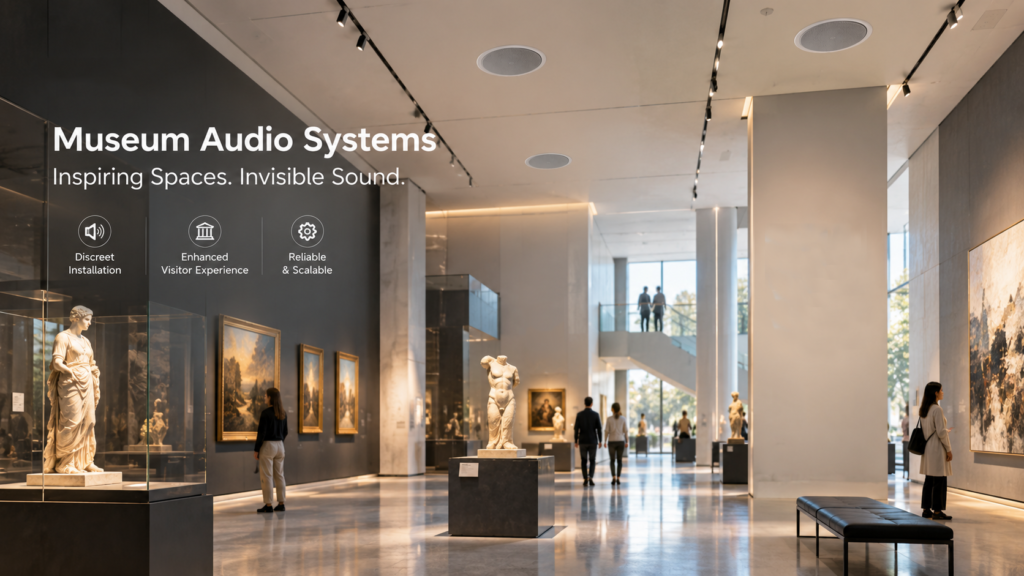
Museum & Cultural Venue Audio Systems: Preserving Atmosphere Through Intelligent Audio
AmpVortex Commercial Audio Solutions Series
Professional Guides for Designing Modern Multi-Zone Commercial Audio Systems
Introduction: When Sound Becomes Part of the Museum Experience
Museums and cultural venues are designed to communicate stories, preserve history, and create emotional connections. While visual elements such as artwork, artifacts, and architecture receive significant attention, audio plays an equally important role in shaping visitor experiences.
A professionally designed Museum Audio System does more than provide announcements or background music. It creates an immersive environment where sound supports storytelling, enhances atmosphere, and guides visitors through different spaces without distracting from the exhibits.
Modern museums require intelligent audio solutions that balance clarity, flexibility, and architectural sensitivity. From quiet gallery spaces to interactive exhibitions and large cultural halls, a well-designed Gallery Audio System ensures every sound element contributes naturally to the visitor journey.
The Unique Audio Challenges of Museums and Cultural Venues
Unlike commercial spaces such as restaurants or retail stores, museums require highly controlled audio environments. Every area may have different acoustic requirements, visitor behaviors, and content needs.
1. Maintaining a Quiet and Immersive Atmosphere
Museums often prioritize peaceful environments where visitors can focus on exhibits. Excessive volume, uneven sound coverage, or audio leakage between rooms can negatively impact the experience.
A professional Museum Audio System must provide:
- Precise sound distribution
- Controlled volume levels
- Minimal audio spill between zones
- Natural and comfortable listening experiences
Advanced speaker placement and zoning technology allow museums to deliver clear audio only where needed while maintaining the overall atmosphere.
2. Supporting Multiple Exhibition Zones
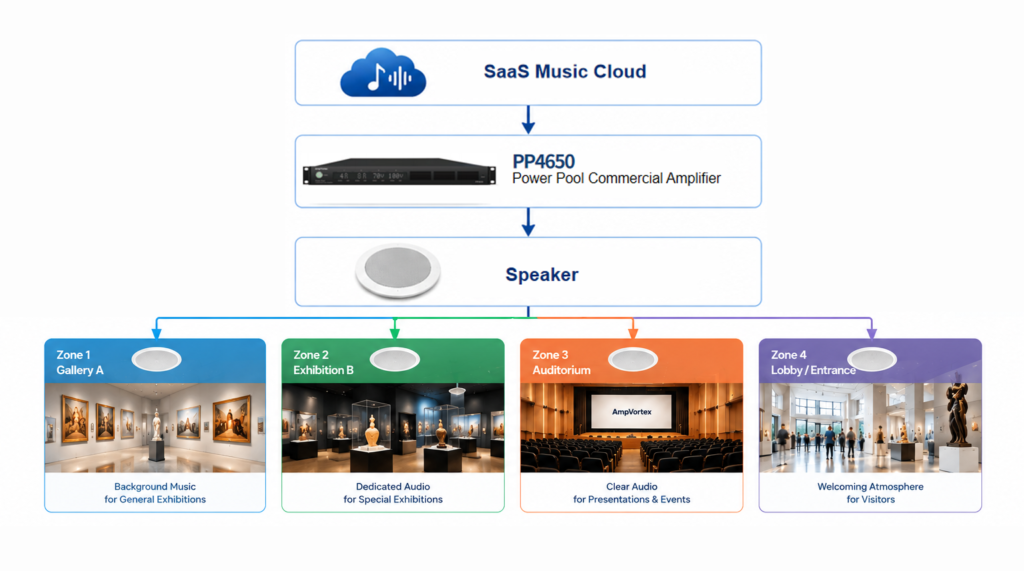
Modern cultural venues often contain multiple areas with different audio requirements:
- Permanent exhibitions
- Temporary galleries
- Interactive installations
- Educational rooms
- Auditoriums
- Entrance and reception areas
A multi-zone audio architecture allows each space to operate independently. Museum staff can adjust volume, change audio content, or schedule announcements for specific areas without affecting the entire building.
This flexibility is essential for creating a scalable Gallery Audio System that can evolve as exhibitions change.
Museum Environments
Network-Based Audio Management
Traditional audio systems often require complex manual adjustments. Today’s museums increasingly adopt network-based commercial audio solutions that provide centralized control and easier management.
With intelligent audio platforms, operators can:
- Manage multiple audio zones from one interface
- Adjust volume remotely
- Schedule automatic announcements
- Monitor system status
- Integrate audio with building management systems
This approach improves operational efficiency while reducing maintenance complexity.
Directional and Discreet Speaker Solutions
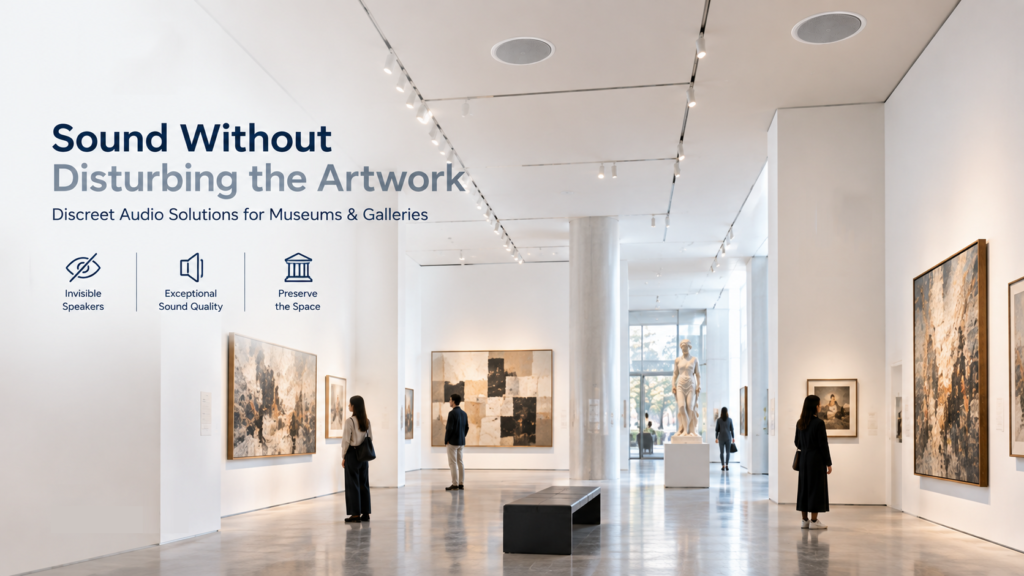
Museums must consider both sound quality and visual design. Large visible speakers can interfere with architectural aesthetics and exhibit presentation.
Modern Museum Audio System designs often use:
- Ceiling speakers
- Wall-mounted compact speakers
- Column speakers
- Directional audio technology
- Hidden speaker installations
These solutions deliver accurate sound coverage while preserving the visual integrity of galleries and historical spaces.
Creating Better Visitor Experiences Through Audio
Audio Guides and Interactive Exhibitions
Many museums now combine traditional exhibits with interactive digital experiences. Audio systems support:
- Self-guided tours
- Multimedia displays
- Interactive storytelling
- Educational programs
- Immersive exhibitions
A properly designed Gallery Audio System ensures that visitors receive clear and engaging audio content without disturbing nearby guests.
Background Audio and Environmental Sound Design
Sound can transform how visitors perceive a space.
Examples include:
- Natural sounds in environmental exhibitions
- Historical recordings in cultural displays
- Ambient soundscapes in immersive installations
- Music environments supporting artistic themes
When carefully designed, audio becomes an invisible layer that strengthens emotional connection and storytelling.
Key Design Considerations for Museum Audio Systems
Acoustic Planning
Every museum has unique architectural characteristics. High ceilings, stone surfaces, glass structures, and open exhibition halls can create challenging acoustic conditions.
Professional audio planning considers:
- Room dimensions
- Acoustic reflections
- Visitor movement patterns
- Speaker positioning
- Sound pressure levels
Proper acoustic design ensures consistent audio performance throughout the venue.
Easy Content Management
Museum teams frequently update exhibitions and events. An effective audio solution should allow non-technical staff to manage content easily.
Features such as:
- Simple control interfaces
- Preset audio zones
- Remote management
- Scheduled playback
help museums operate efficiently without requiring specialized technical knowledge.
Reliable Performance for Long-Term Operation
Cultural venues often operate every day with thousands of visitors. Audio systems must provide:
- High reliability
- Stable performance
- Energy efficiency
- Easy maintenance
Professional-grade commercial audio equipment ensures continuous operation while protecting the museum investment.
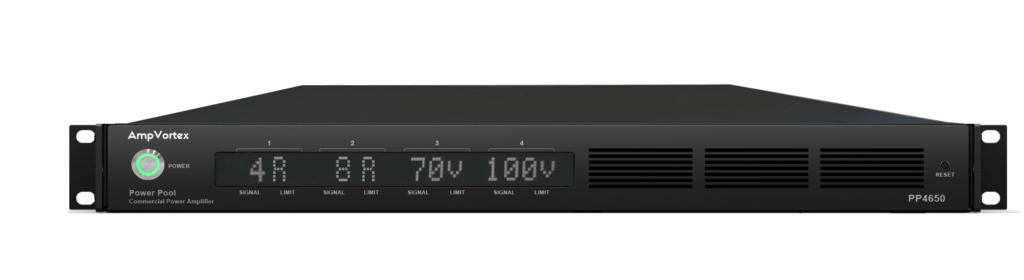
Why Choose AmpVortex for Museum Audio Solutions?
AmpVortex specializes in designing intelligent commercial audio systems for complex environments, including museums, galleries, cultural centers, and multi-purpose venues.
Our solutions focus on:
- Multi-zone audio architecture
- Clear and balanced sound distribution
- Flexible system control
- Seamless integration with modern facilities
- Long-term reliability
By combining advanced audio technology with thoughtful system design, AmpVortex helps cultural venues create meaningful experiences where sound supports storytelling rather than competing with it.
Conclusion: Designing Audio That Protects the Museum Atmosphere
A successful Museum Audio System is not simply about making sound louder. It is about creating the right sound, in the right place, at the right moment.
Through intelligent zoning, discreet speaker solutions, and flexible audio management, modern museums can preserve their atmosphere while delivering richer visitor experiences.
For galleries, exhibitions, and cultural venues seeking a professional Gallery Audio System, AmpVortex provides scalable commercial audio solutions designed for today’s evolving cultural environments.
Learn more at www.ampvortex.com